

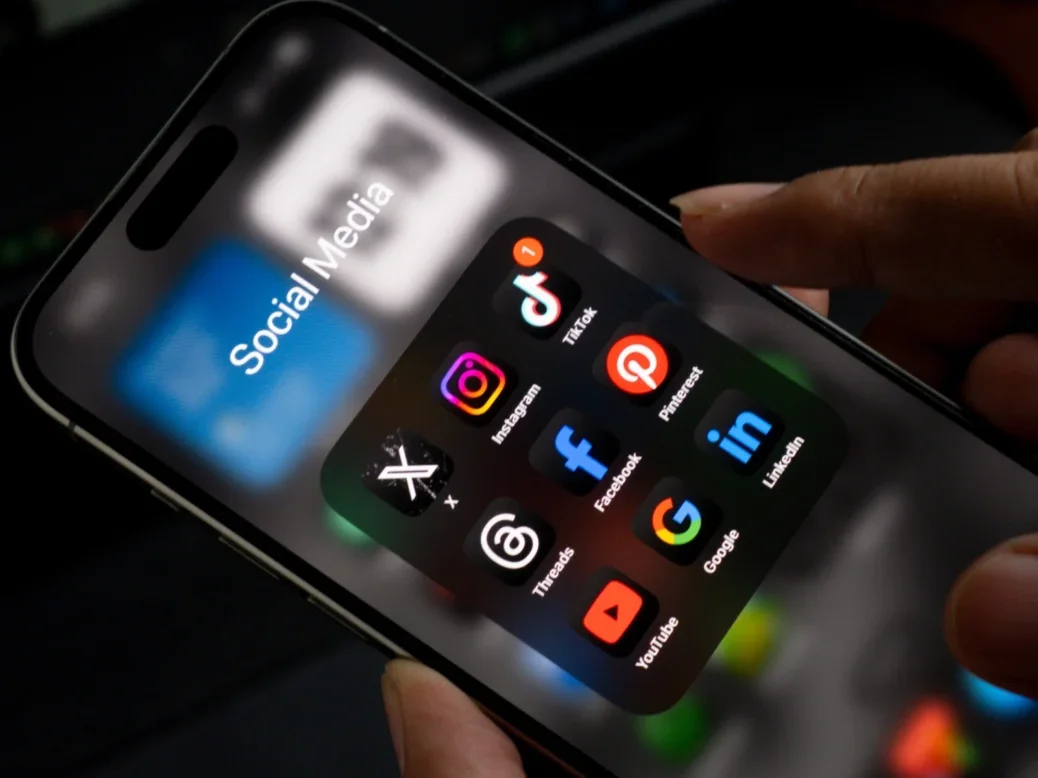
The US Government has intervened in the UK’s proposals to force tech platforms to put “trustworthy” news providers at the top of social and video feeds.
The UK Government has proposed to “explore legislative options to require social media to make news content from PSM [public service media] providers, and potentially also national and local news publishers, prominent and easily discoverable”.
It said: “This is crucial for countering misinformation, especially during times of social unrest or crisis.”
The US Government raised “serious concerns” over free speech in relation to how the UK Government, or a body empowered by it, would designate what outlets are “trustworthy” and said it could be a “mechanism for viewpoint-based censorship”.
A statement issued on the US Embassy website said: “If the UK compels platforms to boost government-preferred media in algorithmic feeds, the effect on a government-disfavoured speaker or media source’s reach is not meaningfully different than outright removal. The US Government would likely consider such a measure as facilitating censorship.”
The US Government added that the proposals risk “disincentivising viewership for or reducing the reach of independent journalists who lack the credentials deemed ‘trustworthy’ by the government, in effect undermining independent journalists”.
The intervention was in response to a Government consultation over the Green Paper “Watch this Space: A new strategic direction for UK media.”
The Green Paper was published under Keir Starmer’s Government, before Andy Burnham succeeded him as Prime Minister, but Lisa Nandy remains culture secretary and it continues to be scrutinised. A House of Commons debate is being held about it on Tuesday.
The Green Paper said a starting point may be the definition for a recognised news publisher in the Online Safety Act 2023, which includes those “whose primary purpose is publishing news-related material, created by different persons, subject to editorial control, a standards code, and with a mechanism for resolving complaints”.
The US said adding an extra requirement on top of the Online Safety Act “risks heightening concerns about the ability of US and other news sources that are not deemed ‘recognised news publishers’ to compete on equal terms for visibility and audience reach”.
The News Media Association, which represents many of the UK’s national and regional publishers, said defining who is trustworthy “would put the state, or a body accountable to it, in charge of which journalism the public sees. This would be incompatible with a free press, and represent press regulation by the back door.”
The NMA urged the Government to “state unambiguously” that eligibility for prominence would not be tied, however indirectly, to membership of a regulator approved by the Press Recognition Panel – currently only Impress.
The PRP itself argued the Online Safety Act definition is “too broad to provide meaningful assurance to the public” as it “does not distinguish between publishers subject to effective independent oversight and those relying on industry-controlled or in-house complaints arrangements”.
Warning that commercial news publishers could be put at a disadvantage
The NMA said platforms like Youtube and Facebook could take the “easiest route” to compliance with the proposals by choosing to highlight public service broadcasters like the BBC and ITV.
“It is also likely that, in practice, some eligible publishers would be excluded altogether,” the NMA warned.
“The effect is a transfer of visibility – and with it traffic and revenue – from commercial publishers to broadcasters already in receipt of public funding and other regulatory advantages.
“In this scenario, content from news media is put at a disadvantage even if the commercial sector is the first to ‘break’ a story.
“This would likely lead to newsrooms being disincentivised to produce public interest journalism that, while it has high societal value, may not produce sufficient commercial returns because PSBs would receive the benefits of prominence.”
The NMA was also sceptical that, even if news publishers are fairly given prominence, it would have the same benefit as public service broadcasters being put at the top of the TV channels list.
It said TV prominence “brings extra viewers” who “enable commercial broadcasters to charge more for advertising.
“The same logic will not work for prominence on social media. Greater visibility is by no means certain to lead to materially more news readers and greater revenue. It is likely… that many citizens will ignore or even block news sources surfaced in their feeds. Even if they are interested, many users will simply read the headline and/or summary within the social media platform’s ecosystem, and not click through to the article.
“In these scenarios, any value created is retained by the platform. And, even when a user does click through, the nature of the digital advertising market – dominated by Google – means that publishers will not receive significant value.”
The NMA also questioned how local news could be surfaced as part of any prominence rules without requiring “intrusive tracking” of users.
It said the Government should “demonstrate that local content can be served to local readers” without tracking them “in a way that a regulator can audit, and without disadvantaging local outlets… or pitting local titles against each other before any legislation is brought forward. If this is not possible, the policy should be abandoned.”
The trade body said the Digital Markets, Competition and Consumers Act 2024 is poised to be the “quickest and most effective route” towards a “healthier information ecosystem”.
The Competition and Markets Authority has already designated Google Search under the DMCCA and issued a ruling ordering it to give more transparency and control to publishers over how their content is used, including in AI features.
The NMA suggested Facebook and Instagram owner Meta, Youtube and Tiktok could similarly be designated with strategic market status and given requirements to, for example:
— Give transparency over their algorithms so publishers can optimise their content to give it the best chance of being visible
— Provide more user data so publishers can understand audience needs and how to engage with them on each platform
— Give publishers more control over how their content and brand is shown to users, making trusted mastheads more visible
— Allow easier routes towards newsletter and subscription sign-ups.
The DMCCA could also ultimately be used to force platforms to pay publishers for the use of their content, it suggested.
The NMA said this could be preferable to the proposed prominence regime because it would have no press freedom concerns, achieve results more quickly, is more future-proofed for platform changes, can be better targeted for each platform.
The BBC also appeared to back the use of the Digital Markets Act in its own response to the consultation.
It said it “supports policy interventions that improve access to trusted news while maintaining a thriving, plural news ecosystem in which both PSBs and commercial news organisations can succeed.
“Government should explore the extension of existing regimes – for example they might consider using the digital markets regime or drawing on elements of the online safety regime – to support transparency and content ranking, better access to data, and improved attribution for a wide range of news providers.”
Concerns over the state ending up the “arbiter of what is and isn’t trustworthy” were also shared by the National Union of Journalists and Chartered Institute of Journalists.
The NUJ said that giving UK public service media automatic “trusted” status was “perhaps the simplest method” but that this “would also possibly mean people have reduced access to a diverse range of media and could potentially put individual journalists and independent publishers who make money on social media out of business”.
Instead, the NUJ said tackling misinformation on social media “must start with changes to tech giants’ algorithms. Accurate information from trusted and reputable sources, including journalists and journalistic outlets, should be more prominent in feeds than information on the same topic from other contributors.”
Email pged@pressgazette.co.uk to point out mistakes, provide story tips or send in a letter for publication on our "Letters Page" blog
